Catholic: consent, rings & blessing
The parish-approved liturgy includes consent, rings, prayers and the nuptial blessing. The wedding may be celebrated within Mass or without Mass.
Discover the rituals, family customs and ceremony moments that give your wedding its character.
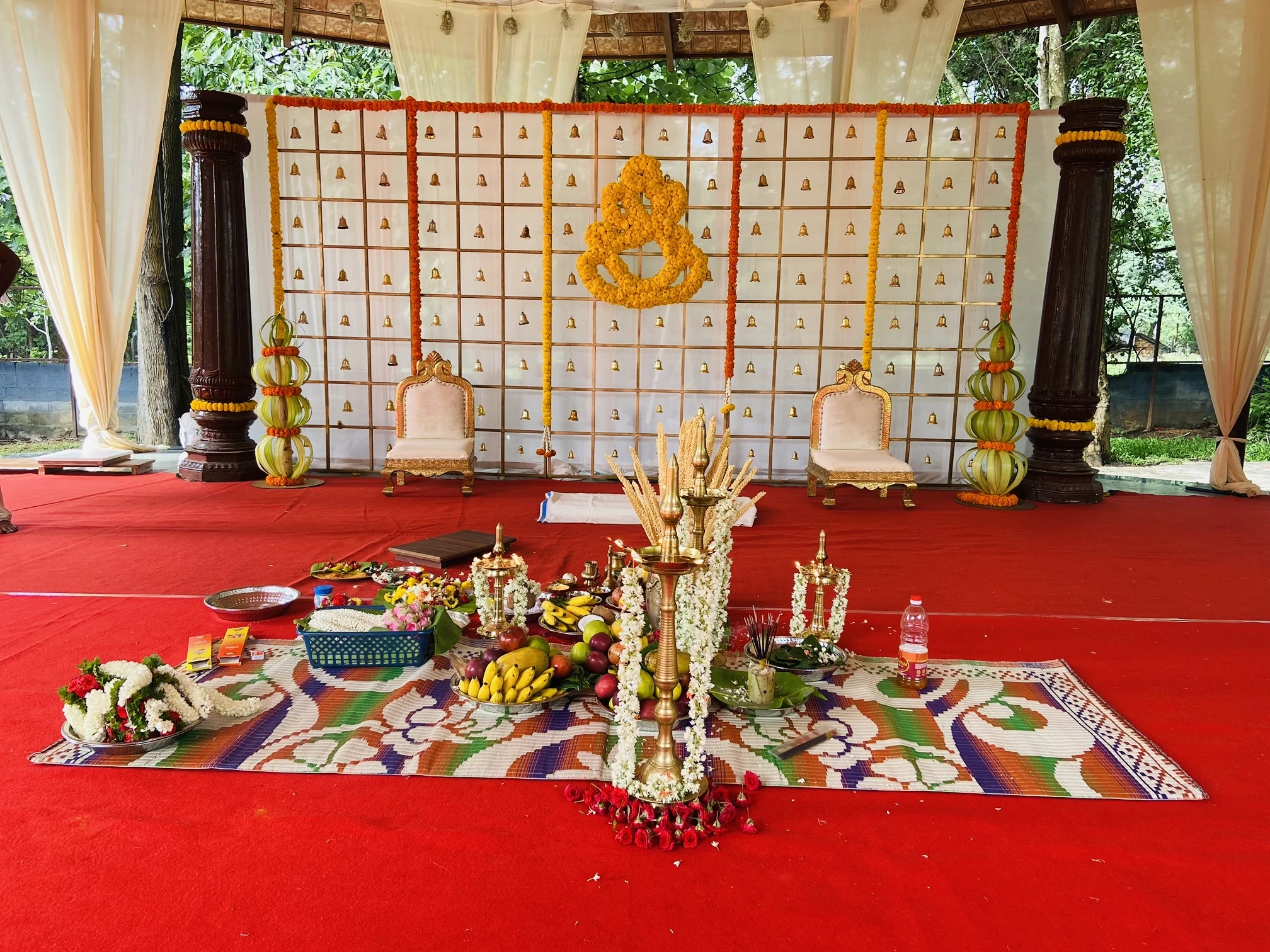
Explore familiar wedding moments below. The final rites and their order follow your family, community and officiant.
A familiar Hindu wedding flow, with regional customs and the priest-led rites shaped by your family.
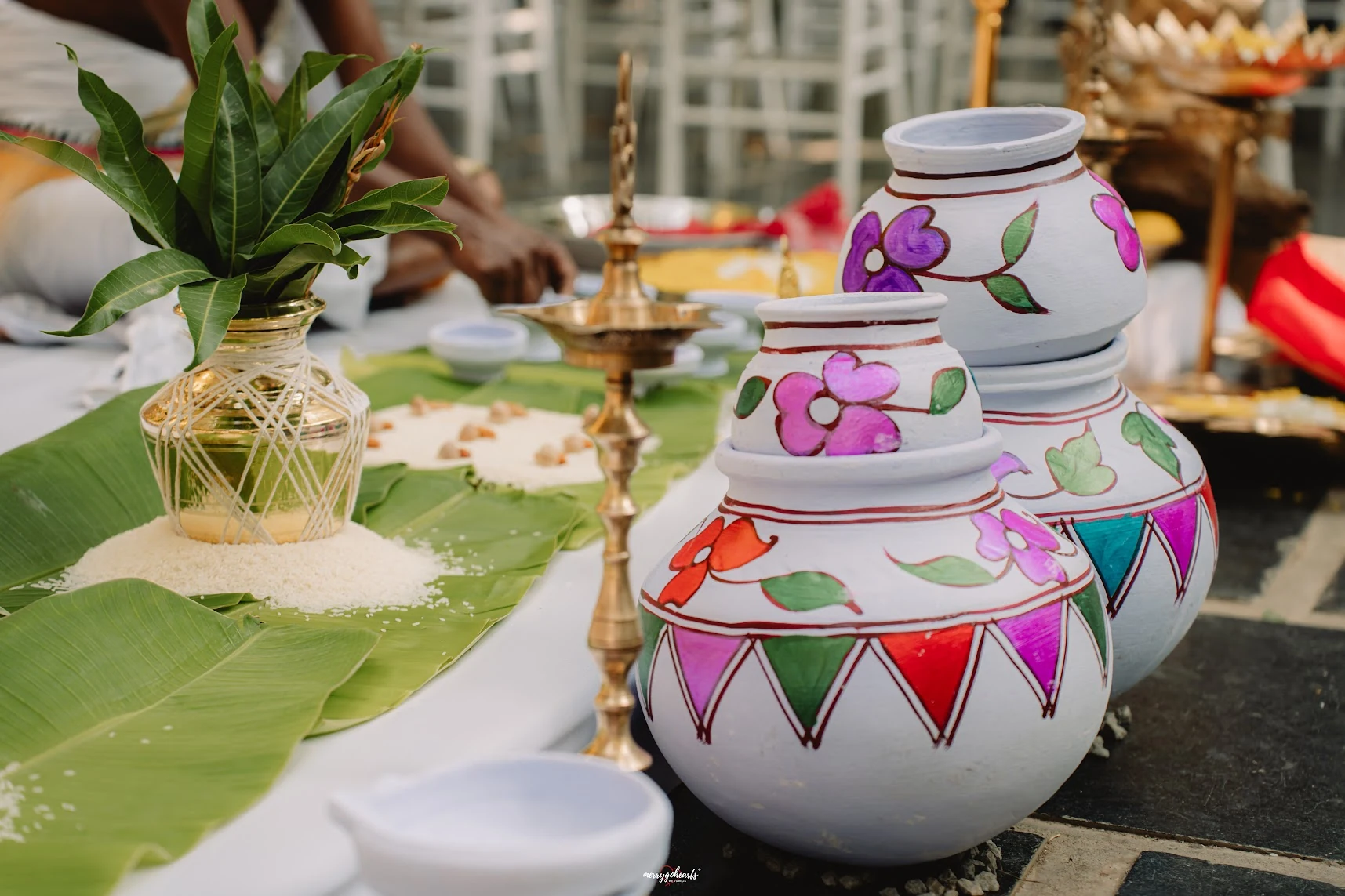
Chosen pre-wedding gatherings bring henna, turmeric blessings and time with family. Music or a sangeet can be planned separately.
The arrival procession leads into the family welcome. Milni introduces relatives where observed; Varmala is the exchange of garlands.
Invocatory prayers begin the chosen mandap programme. Family blessings or Kanyadaan and the joining of hands follow the priest’s order.
The sacred-fire rites include offerings. Laja Homa involves grain offerings with family participation in traditions that observe it.
Pheras are fire circuits; Saptapadi is seven steps. Their arrangement, number of circuits and order depend on the chosen priestly tradition.
Sindoor or a marriage necklace may complete the family’s rite. Elder blessings, Bidai and a home welcome follow where observed.
Marwari Hindu celebrations bring family observances together with the priest-led wedding. Pre-wedding customs vary by household.
Some families begin with Ganesh worship and the turmeric ceremony, with music gatherings arranged around the wedding.
Mayra or Mahira honours the maternal family. Palla Dastoor concerns ceremonial clothing and items from the groom’s family.
Nikasi precedes the procession where observed. The venue welcome may include the Toran entrance, aarti and garland exchange.
The garments are joined in Granthi Bandhan. Family blessings, Kanyadaan and hand-joining follow the selected priestly programme.
Fire offerings, circuits and the seven steps form part of the family’s wedding rites, in the order led by the priest.
The farewell is followed by the chosen home welcome. Smaller household customs are kept within the family’s own tradition.
Tamil Hindu ceremonies vary by community. Kasi Yatra, Oonjal and certain preparatory rites are especially associated with Tamil Brahmin traditions.
The engagement marks the family agreement. Gifts and tambulam may accompany it, either earlier or during the wedding celebrations.
Preparatory vows, ancestor-related blessings and sowing observances appear in some Tamil Brahmin programmes. These are separate rites.
Where followed, the groom’s symbolic departure towards renunciation is answered with an invitation to household life.
Garlands are exchanged. In families observing Oonjal, the swing ceremony brings family songs and blessings around the couple.
The wedding thali is tied in the family’s chosen form at the designated auspicious moment.
The selected Vedic sequence may include fire offerings, hand-taking, seven steps and stepping on the grinding stone, symbolising steadiness.
Family customs, playful Nalangu observances and a home welcome may follow the ceremony or take place separately.
From family preparations to Jeelakarra Bellam and Talambralu, the central moments follow your family’s muhurtham and priestly tradition.
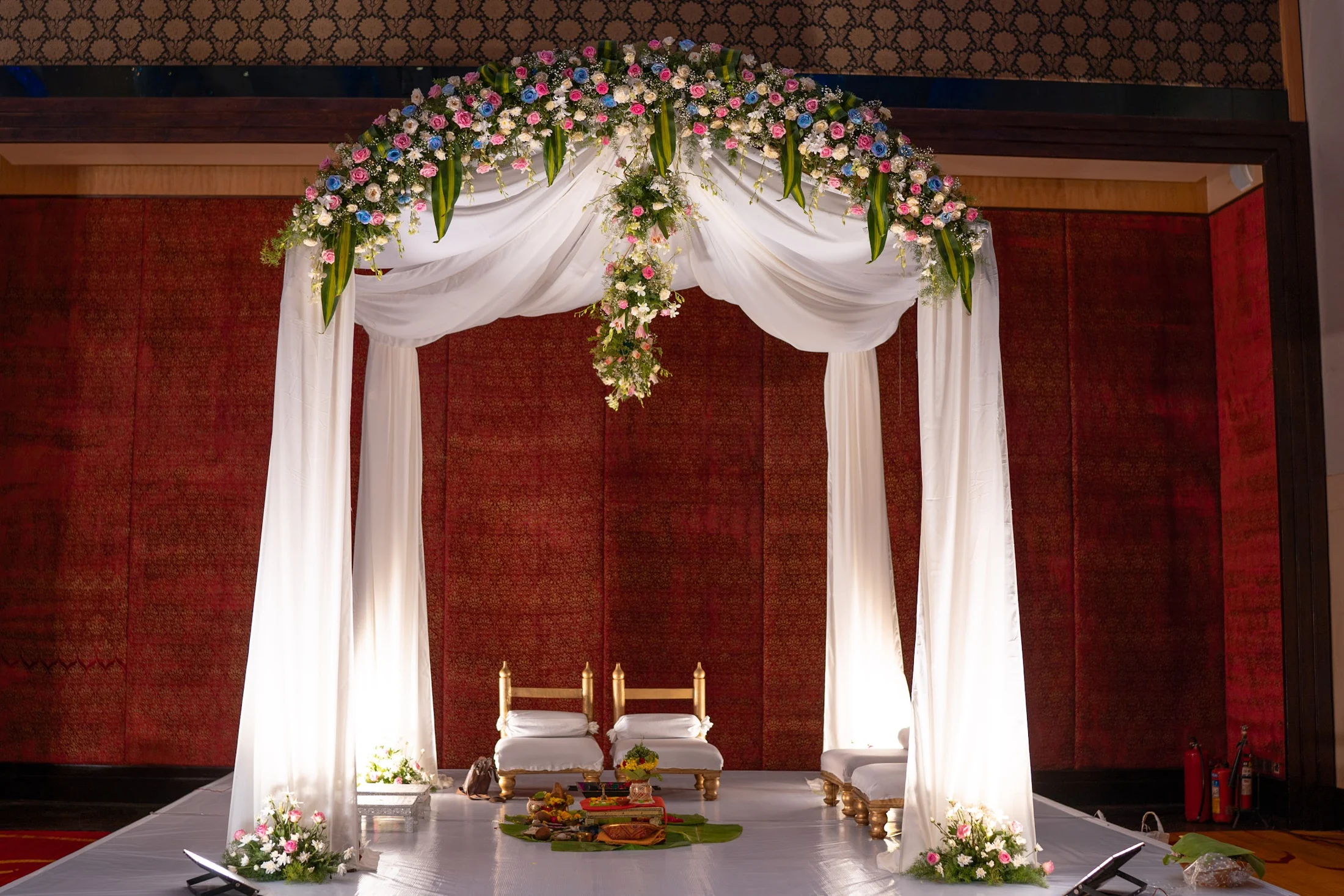
The formal engagement brings the families together and may take place well before the wedding celebrations.
The bride and groom receive family preparations and blessings, commonly including turmeric observances in their respective homes.
Some families include Snatakam or Kashi Yatra. Ganesh and Gauri prayers and parental participation follow the priest’s programme.
At the priest’s muhurtham cue, the couple place cumin and jaggery paste on each other’s heads in a rite symbolising their bond.
The marriage token is tied according to family custom. Talambralu brings the joyful showering of rice over one another.
Seven steps, elder blessings and the chosen home-entry observances complete the family’s programme. Their position and order can vary.
Dhare and the marriage symbols are central to many Kannadiga Hindu ceremonies. Vedic and Veerashaiva/Lingayat forms follow different programmes.
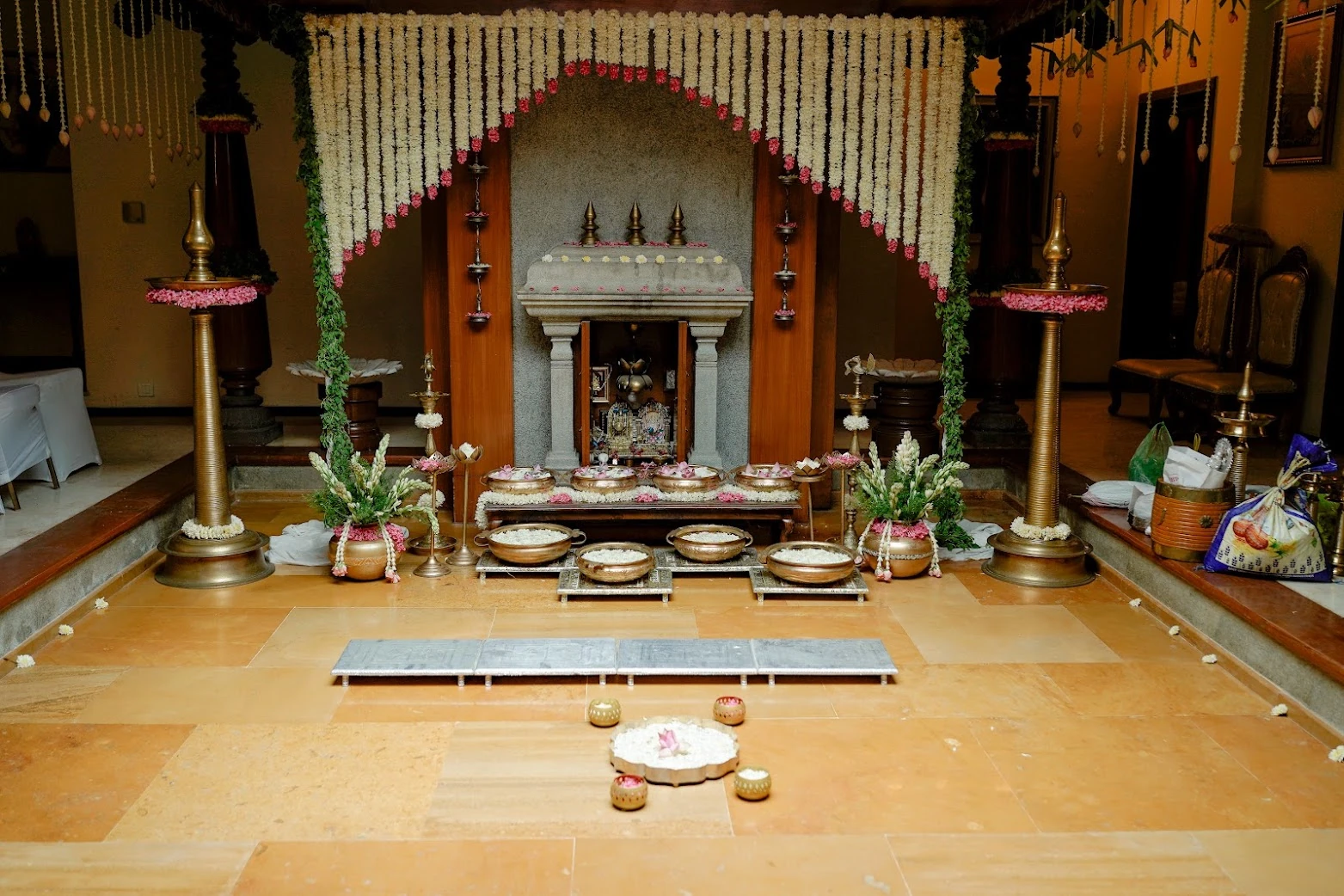
Engagement or family agreement may include the exchange of tambulam and written wedding details where observed.
The groom is formally welcomed or honoured. Family prayers and, in some traditions, Kashi Yatra precede the central ceremony.
Family blessings involve liquid being poured over the couple’s joined hands. The accompanying coconut, betel and other items vary by community.
The wedding token is tied in the chosen family form, with the central marriage moment led by the officiant.
Hand-taking and seven steps appear in many Vedic programmes. Veerashaiva/Lingayat forms may centre on kalashas and Uma-Maheshvara worship rather than fire rites.
Some families include the Arundhati star-viewing observance, followed by elder blessings and the chosen home welcome.
Kerala Hindu weddings include distinct Nair, Namboothiri and other community traditions. These examples keep those differences clear.
For many Nair families, the welcome leads into the agreed auspicious moment and the central marriage observances.
The wedding token is tied in the community’s chosen form. Participation and preparation differ between Kerala Hindu traditions.
Cloth-giving is especially associated with Nair marriage traditions. Garland exchange and family blessings may accompany the ceremony.
Namboothiri weddings follow a distinct Vedic programme, including preparatory ayaniyoonu and punyaham, followed by rites such as udakapoorvam and panigrahanam.
The documented Namboothiri form includes popped-rice fire offerings, stepping on a grinding stone and wedding Vedic recitation, known as Veli Othu.
The home welcome follows the community’s practice. Nair and Namboothiri examples above are distinct ceremony forms, not one combined sequence.
Gujarati Hindu celebrations combine family welcomes, hand-joining, fire rites and blessings. Garba is a separate celebration choice.
The turmeric ceremony and family pujas prepare for the wedding. Engagement celebrations or a garba evening can be arranged separately.
The groom is welcomed by the family, with garlands exchanged in the household’s chosen order.
Hand-joining, sacred-fire worship and grain offerings follow the Maharaj’s programme.
Fire circuits and seven steps are distinct observances. Some Gujarati traditions use four Mangal Phera circuits; the family’s priestly form determines the arrangement.
Kansar feeding and marriage symbols may complete the rites, followed by blessings, farewell and the chosen home welcome.
A Bengali Hindu biye connects family blessings, the first look, garland exchange and the wedding rites. Household customs shape the sequence.
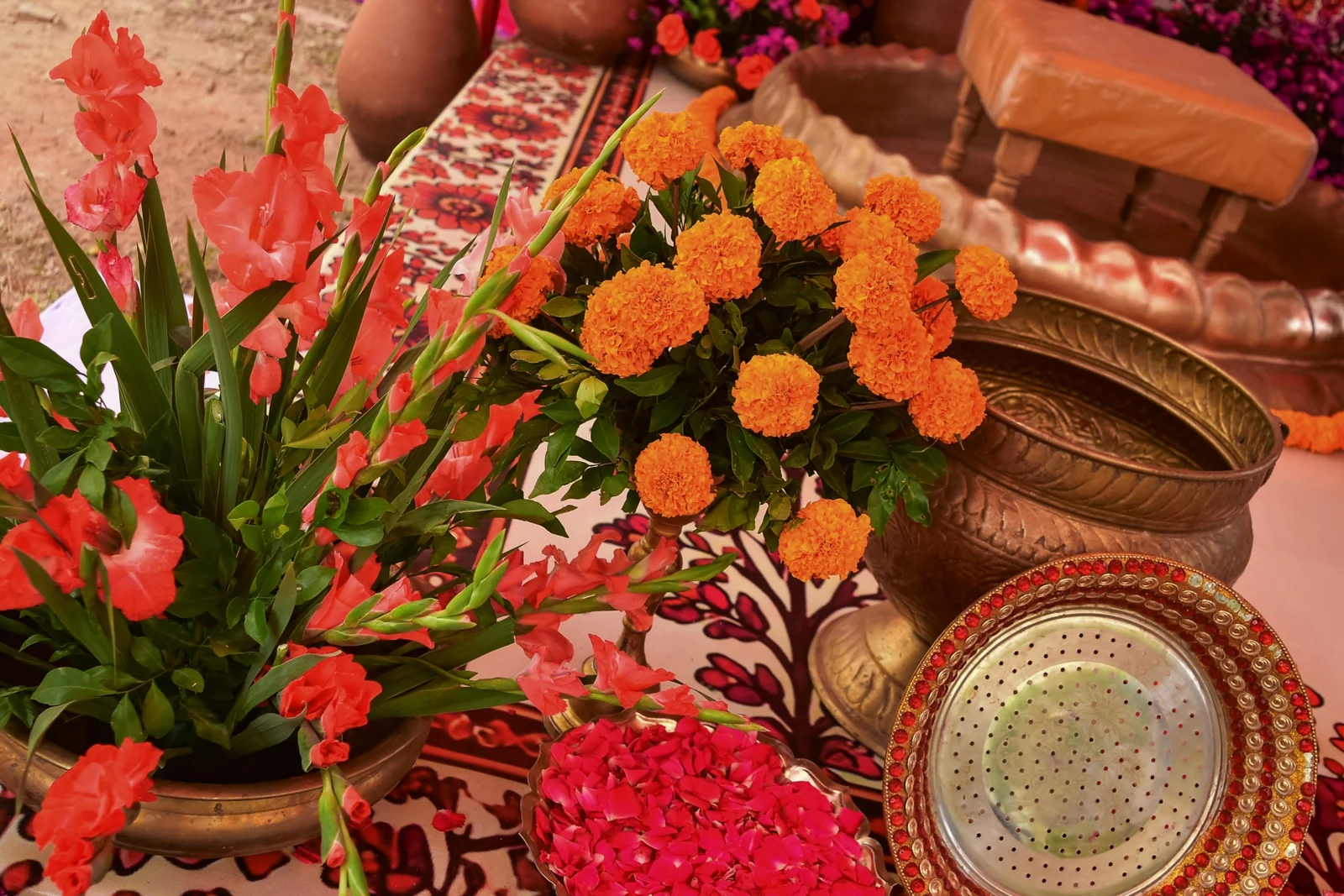
Family blessings and the celebratory pre-wedding meal begin the preparations. Some households also observe Dodhi Mangal and Nandi Mukh.
The turmeric observance brings family blessings and preparations around the bride and groom.
The groom is welcomed. Where observed, the bride is carried around him on a piri before the auspicious first look.
The couple exchange garlands. Family participation and joined-hand rites proceed in the priest’s order.
Fire offerings and the sindoor rite form part of documented Bengali Hindu ceremonies. The carried Saat Paak is distinct from later fire rites.
Farewell, the home welcome and the wedding feast extend the celebrations. Their timing and the return visit depend on household tradition.
The denomination and parish shape the wedding service. Catholic, Protestant and Eastern Christian ceremonies follow distinct forms.
The parish-approved liturgy includes consent, rings, prayers and the nuptial blessing. The wedding may be celebrated within Mass or without Mass.
Published Anglican forms include readings, declarations, vows, rings, prayers and blessing. The local minister supplies the service order.
Some Eastern orders include betrothal, crowning, a common cup and a procession. These are distinct from a Western vows-based service.
Regional marriage symbols, garments, music and the church exit follow parish practice. The reception is planned around the actual service.
A date, a few ideas, or simply a feeling. Tell us what you have in mind, and we’ll find the way forward together.
Tell us about your weddingChat on WhatsApp